Radon testing belongs at the very start of a basement plan, before anyone frames a wall, because the result can decide where a pipe runs, what gets sealed and which corners of the floor plan stay open. Radon is a radioactive gas that seeps up from the soil. You can't see it or smell it, and the basement sits closest to the source, so the only way to know your level is to test.
October is a good month to start. Heating season closes Colorado houses up, the windows stay shut, and a test taken now measures the house the way you'll actually live in it through the winter. The order we recommend is simple: test, read the result, decide, then build.
Step 1: Start with radon testing in the space you'll finish
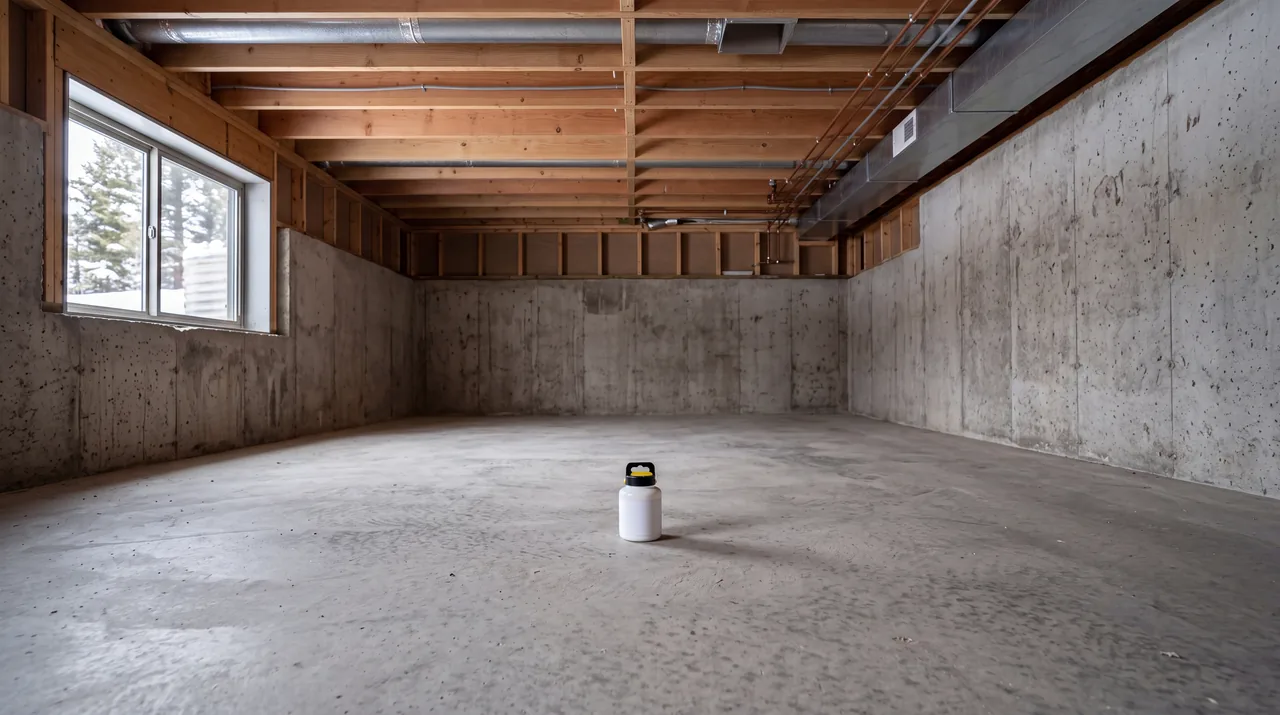
Test the lowest level you live in or plan to live in. If you're about to finish the basement, that means the basement, even if it's bare concrete and open joists today. The Environmental Protection Agency (EPA) points people to the lowest lived-in level for exactly this reason: radon in basement air usually reads higher than upstairs, and your family will soon spend time there.
Keep doors and windows closed during the test, apart from normal coming and going. For short-term tests, EPA guidance calls for those closed-house conditions to begin at least 12 hours before the test starts. Follow the placement instructions on the kit to the letter, and don't move the device once it's running.
Short-term or long-term?
The EPA describes short-term tests as lasting 2 to 90 days and long-term tests as lasting more than 90 days. A short-term test gives you a number quickly. A long-term test comes closer to your year-round average, because radon levels move with weather and season. If you're planning a basement this winter, start with a short-term test so you have something to work with, and consider a long-term test if the first number lands near a decision point.
The Colorado Department of Public Health and Environment (CDPHE) runs a radon program and encourages Colorado homeowners to test. Its website is the best first stop for a radon test in Colorado, including where to find kits and how to find certified measurement professionals if you'd prefer someone else run the test.
What this changes in your plan: nothing gets framed yet. Hold the design loose until you have a number.
Step 2: Read the result against the EPA levels
Radon is reported in picocuries per liter of air, written pCi/L. The EPA's guidance breaks the result into three practical zones:
- At or above 4 pCi/L, the EPA recommends fixing the home.
- Between 2 and 4 pCi/L, the EPA recommends considering a fix.
- Below 2 pCi/L, there's no action called for, though you should test again after the basement is finished.
One short-term reading is a starting point, not a verdict. If a short-term result comes back at 4 or higher, the EPA's guidance is to take a follow-up test before deciding. A long-term follow-up gives the more representative answer. If you use a second short-term test, average the two results and compare that average to the action level.
What this changes in your plan: the number tells you whether mitigation is part of the basement project or not. Write it down with the test dates and keep the lab report. You'll want it again later.
Step 3: Decide on radon mitigation before the design is final
If your result calls for a fix, hire a certified radon mitigation contractor. Master Builders of Colorado doesn't do radon mitigation, and you want a specialist designing that system. CDPHE's radon program is a good place to learn what certification to look for. Ask any mitigator you talk to for proof of it.
The most common approach for a home with a basement slab is sub-slab depressurization. The mitigator cuts a suction point through the slab, runs a pipe from it to a fan, and vents the air above the house. The fan is usually placed outside the living space, in an attic, a garage or on an exterior wall. That pipe has to travel from the slab to its exit point, and its route is the part that matters most to a basement plan. It might climb through a closet, a corner chase, a utility room or a garage wall.
Mitigation also involves sealing. Sump pits get a sealed cover, and accessible cracks in the slab and gaps where the floor meets the wall get sealed. All of that is easiest while the concrete is still bare. Once carpet, flooring and drywall go in, those spots disappear from view.
If you land between 2 and 4 pCi/L, our advice is to get a mitigator's opinion before framing anyway. Leaving room for a pipe route now is far easier than cutting into new drywall later.
Sometimes the best route for the pipe climbs through the main floor and into the attic. At that point the basement project touches other rooms, which is one reason radon decisions can fold into a broader whole-home renovation plan when the house needs other work too.
Step 4: Build around the system
With the mitigator's design in hand, the basement layout can lock in. These are the details we'd want settled before framing starts:
- Frame a chase for the radon pipe where the mitigator routed it, and size it so the pipe isn't squeezed or rerouted to fit the drywall.
- Keep the system's pressure gauge, usually a small U-tube manometer on the pipe, where you can see it. It's how you check that the fan is running.
- Plan access to the sealed sump cover, since the pump below it still needs service.
- Keep the suction point out from under built-ins, bars or anything else that would be hard to remove later.
- Finish slab crack sealing before any flooring goes down.
These are the parts of a finished basement nobody admires, which is exactly why they deserve attention. A chase that looks like it was always meant to be there says more about a builder than the trim does, and it's the idea behind the way we approach every project. If you're starting to plan, take a look at our basement finishing service.
After the drywall: test again
Retest after mitigation to confirm the system is doing its job. Your mitigator should explain how and when they test. Then test again once the basement is finished and in use. New walls, new rooms and changes to heating and air movement can all shift how radon behaves in a house, and a finished basement is now a lived-in level.
Keep testing over the years too, following the EPA's guidance. Fans wear out, slabs crack and houses settle, and a number from this October won't describe your house forever.