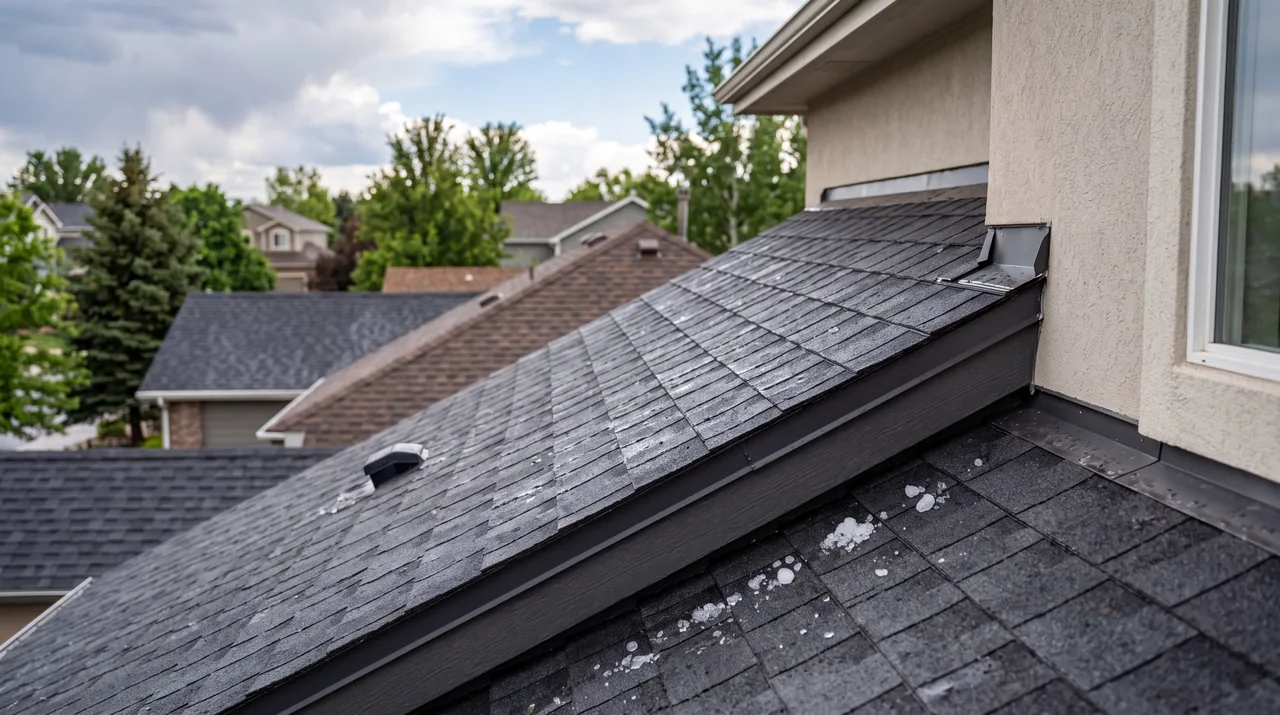
Impact-resistant shingles are roofing products that have passed a standardized hail test, and Class 4 is the highest rating that test gives. Hail season along the Front Range has ended, and fall is when many owners replace roofs damaged in the summer storms, so the choice is on a lot of minds right now. A Class 4 label tells you something useful. It doesn't tell you everything, and the parts of the roof around the shingles matter just as much.
What Class 4 means on impact-resistant shingles
Most impact ratings come from UL 2218, a test standard published by UL. Steel balls are dropped from set heights onto roofing samples, striking the same spot twice. Bigger balls dropped from greater heights move a product up the scale from Class 1 to Class 4. A sample passes a class when it shows no cracks or tears from the impacts. Class 4 shingles came through the largest ball in the test.
FM 4473 is a second standard some products carry. It's published by FM Approvals and uses balls of ice fired at the samples instead of steel dropped onto them. Some manufacturers list it alongside UL 2218 or in place of it.
Here's what the rating doesn't promise. It describes how new samples performed in a lab. Hail larger than the test ball, wind-driven hail hitting at an angle, and shingles that have aged and stiffened can all take damage a new sample wouldn't show. Class 4 shingles can still lose granules or bruise. And the rating belongs to the listed product, so ridge caps, starter strips, vents and flashing may not carry it.
Check the class on the manufacturer's product literature and on the bundle wrapper, and get the exact product name in writing. Some lines come in rated and unrated versions that look alike on the roof.
Hail resistant roofing compared
These are the roof coverings most Front Range owners choose between. Ratings apply to specific products, not whole categories, so confirm the class for the exact line you're considering.
| Roof covering | How it handles hail | What to check |
|---|---|---|
| Standard architectural asphalt | Usually carries no impact class. Hail can crack the mat, knock granules loose and leave soft bruises that shorten the roof's life. | Whether the product has any UL 2218 class at all. |
| Class 4 asphalt | Looks like standard architectural shingles but is built to flex on impact, typically with a modified asphalt or a reinforced back. | The exact product name, its listing, and whether the matching ridge cap is rated too. |
| Metal panels or metal shingles | Many products rate Class 4 because hail rarely punctures them. They can dent, and dents show more on flat, smooth panels than on textured or stamped profiles. | Metal thickness, finish and profile, and how your policy treats cosmetic dents. |
| Synthetic or composite shingles | Molded polymer made to look like slate or shake. Many lines rate Class 4 and flex on impact. | The rating and the manufacturer's installation requirements for the specific line. |
For most houses where asphalt suits the look, Class 4 asphalt is the plain upgrade, and it's where we'd start. Metal fits owners who want a long-lived roof and can accept the chance of cosmetic dents. Synthetic makes sense when the design calls for a slate or shake look without the weight.
What to ask about underlayment and flashing
The shingle is only the top layer. What's under and around it decides whether a damaged shingle turns into a leak. Ask these questions before you sign anything.
Underlayment
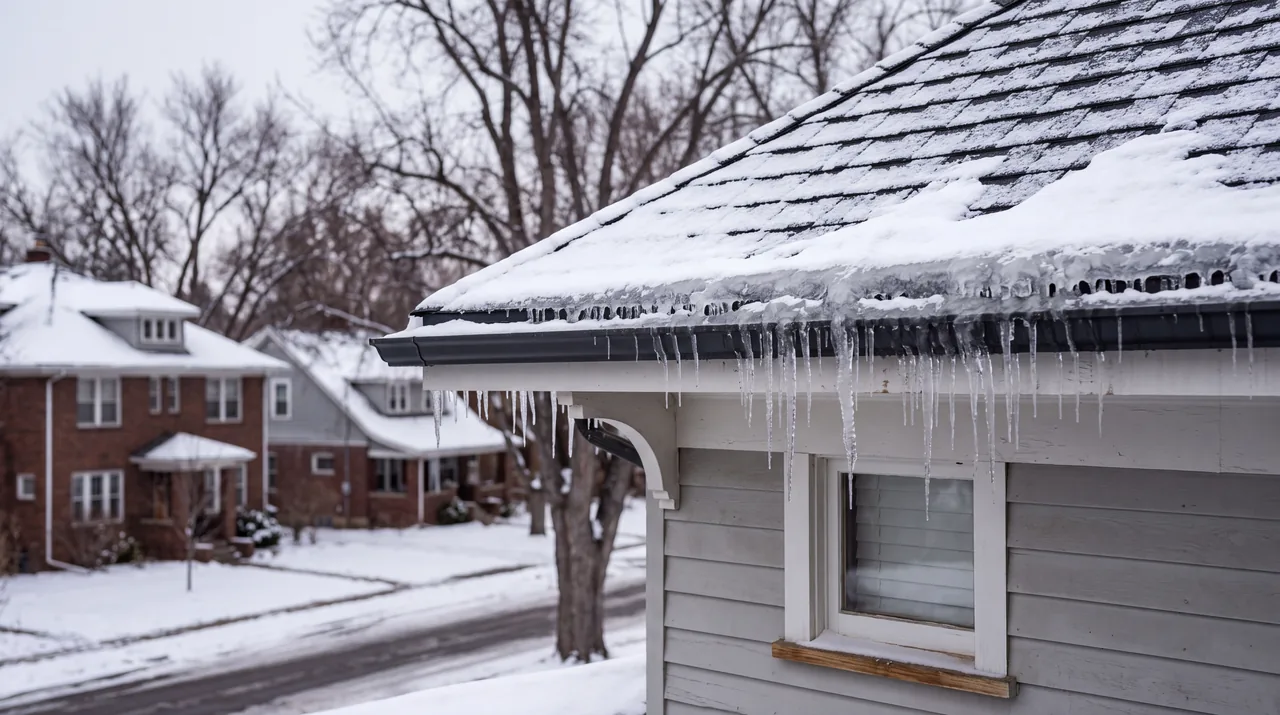
Ask what goes on the field of the roof, synthetic underlayment or felt, and where self-adhering ice and water shield membrane goes. We'd want it at the eaves, in the valleys, and around walls, chimneys and skylights. Codes commonly require an ice barrier at the eaves in cold climates, and your local building department has the final word on what your house needs.
Flashing
Ask whether the step flashing, counterflashing, drip edge, valley metal and pipe boots will be replaced or reused. Hail dents these pieces too, and flashing that's been pried out and bent back rarely seats tight again. On a replacement we'd install new step flashing wherever the roof meets a wall, because that joint is where leaks most often start. If siding has to come off to do it right, ask how it will be put back and sealed.
Fastening, ventilation and accessories
Ask whether the install follows the manufacturer's instructions for nailing and attic ventilation, since manufacturers tie their warranty terms to them. Ask whether the starter strips, hip and ridge caps are rated or at least made for the shingle being installed. And ask who pulls the reroof permit if your city or county requires one; the local building department sets that rule.
These questions apply anywhere along the Front Range, including remodels, additions and exterior work in Denver.
What to ask your insurer before you choose
Some insurers offer premium considerations for a Class 4 roof. Terms vary by company and policy, and some offer nothing for it. Call your insurer before you pick a product and ask:
- Do you offer a premium consideration for a Class 4 roof, and which ratings qualify: UL 2218, FM 4473 or either?
- What proof do you need? Product name, the manufacturer's certification, an invoice, a permit or a photo of the wrapper?
- Does my policy limit coverage for cosmetic damage, such as dents in metal that don't let water in?
- How does the policy handle roof age, and does it pay replacement cost or actual cash value on the roof?
- If a covered loss means code-required work, such as an ice barrier the old roof didn't have, does the policy cover it?
Write down the answers and who gave them. The Colorado Division of Insurance regulates insurers in the state and publishes consumer information if a policy term isn't clear.
Our roofing, siding and window services cover the full roof system, from the deck and membrane to the flashing where the roof meets the walls. Tell us about your roof and we'll talk through which covering fits your house.