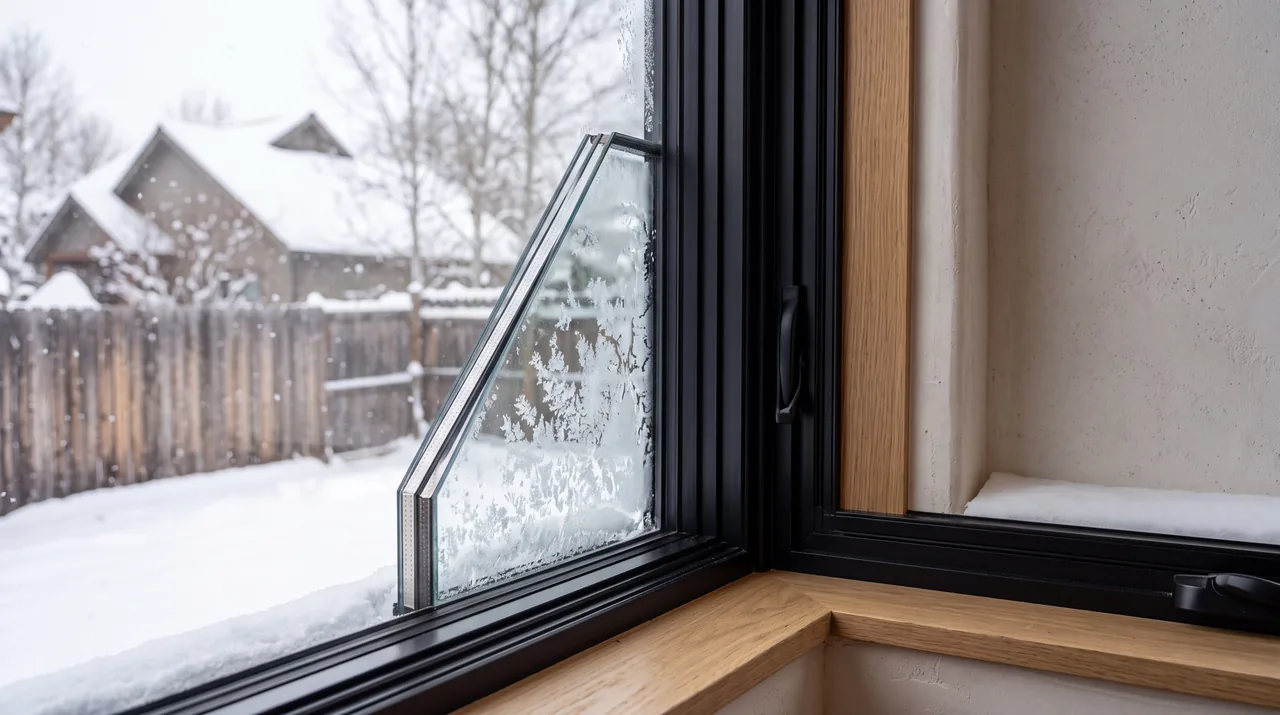
For most Front Range houses, a well-made double-pane window with a good low-E coating, a solid frame and a careful installation does the job, and triple pane windows are worth paying for in specific places: north walls, big fixed glass, bedrooms facing a busy road, and rooms where the glass sweats every winter. The first cold snaps of November are the best time to sort out which openings are which, because the problem windows announce themselves.
Read your windows during the first cold snap
Three common symptoms point to three different causes:
- Water or frost on the inside face of the glass, usually along the bottom edge. The interior pane is cold enough to drop below the room's dew point. Better glass helps, and so does keeping indoor humidity in check.
- Fog or frost between the panes. The seal on the insulated glass unit has failed, and that unit needs replacing no matter what you choose next.
- A draft you can feel at the sash or around the trim. That's air leaking, usually through worn weatherstripping or a gap between the frame and the wall. A third pane won't fix it.
Keep that last one in mind. Plenty of "cold window" complaints are really air leaks, and the fix lives in the frame and the installation, not the glass.
How double vs triple pane windows actually differ
A triple-pane unit adds a third layer of glass and a second sealed gas space. That lowers the U-factor (the rate of heat loss, where lower is better) and keeps the inside pane warmer, which is why triple-pane glass is less likely to sweat. The tradeoffs are weight, thickness and usually a lower solar heat gain coefficient (SHGC), which means less free heat from winter sun. The price goes up too, so get quotes on both.
Compare real products by their NFRC label, which lists U-factor, SHGC and visible transmittance for the whole window, frame included. Most of Colorado, including the Front Range, falls in ENERGY STAR's Northern climate zone. Check the current ENERGY STAR criteria for that zone before you shop, since the requirements have been tightened over time.
The five factors that decide it
Orientation
North-facing windows get almost no useful winter sun. They lose heat all day and gain little back, so this is where the lower U-factor of triple-pane glass pays off most. East and west walls sit somewhere in between.
Our recommendation: if you're upgrading only some openings, start with the north walls and any large fixed glass on them.
Sun
Colorado sun is intense at altitude, and south-facing glass can pull in real heat on clear winter days. A triple-pane unit with a low SHGC throws some of that away. West glass has the opposite problem: hot summer afternoons, where a low SHGC is exactly what you want.
Our recommendation: on south walls, a double-pane unit with a low-E coating tuned for higher solar gain is often the smarter pick. On west walls, either can work, but prioritize a low SHGC. Ask which coatings come with each glass package, because the coating matters as much as the pane count.
Noise
A third pane helps with noise less than most people expect. What blocks sound well is mixing glass thicknesses in the same unit and using laminated glass, because identical panes tend to vibrate at the same frequencies. Manufacturers publish Sound Transmission Class (STC) and Outdoor-Indoor Transmission Class (OITC) ratings for their acoustic options.
Our recommendation: for a bedroom on an arterial road or under a flight path, ask for an acoustic glass package and compare STC ratings, double against triple. Don't assume triple wins.
Frame
Glass is only part of the window. The frame and the spacer at the edge of the glass are where a lot of heat escapes. Aluminum frames without a thermal break conduct heat easily and sweat at the edges. Vinyl, fiberglass and wood frames insulate far better. Triple-pane units are heavy, so sashes have to be stiff enough not to sag and hinges and balances have to be rated for the weight. Dark exterior finishes absorb a lot of heat in Colorado sun, so check the manufacturer's guidance on dark colors for the frame material you're considering.
Our recommendation: choose the frame first, then put in the best glass it's designed to carry. A triple-pane unit in a weak frame is wasted money.
Installation
This is where window performance is won or lost, and it's the part nobody sees once the trim goes back on. The rough opening needs a sill pan or flashing that sends water back out, flashing tape lapped shingle-style with the weather barrier, and the gap between frame and wall sealed against air with low-expansion foam or backer rod and sealant. Skip any of that and you get drafts, leaks and rot no matter how many panes are in the sash.
Inserts fit inside the existing frame and leave the old opening alone. Triple-pane units are thicker, which can limit insert options. A full-frame replacement lets the installer open things up, fix what's there and get the flashing right, and it's the better choice if you see any sign of water damage around the old window.
Our recommendation: pay at least as much attention to how the window goes in as to the glass spec. That's the idea behind our focus on the details where materials meet: the joint between window and wall is the one that decides whether the house stays dry and quiet.
Where triple pane windows earn their place
We'd spec triple-pane glass for these openings:
- North-facing rooms, especially bedrooms and offices where you sit near the glass.
- Large fixed picture windows, where a cold glass surface makes the whole room feel chilly.
- Rooms where the glass sweats even with reasonable indoor humidity.
- Any house being pushed toward high efficiency as part of a bigger project.
Double-pane low-E is the right call for south glass where you want winter sun, large operable sashes where weight strains the hardware, and whole-house jobs on a tight budget, where the money does more good spent on proper installation.
You don't have to pick one for the whole house. Many manufacturers offer both glass packages in the same frame line, so north and south elevations can differ without the windows looking mismatched. Confirm that with the manufacturer before you order.
Time it with other exterior work
Energy efficient windows perform best when the wall around them is right. If siding or a new weather barrier is on your list, doing the windows at the same time lets the flashing tie in properly instead of being patched into old materials, which is why we handle window replacement together with roofing and siding. If you're planning a larger project, windows belong in the plan from the start of a whole-home renovation, where openings can be resized or moved before anything is ordered. Replacement windows in Colorado also need to meet the energy code your local building department has adopted, and that department has the final word on requirements for your house.
If the cold snap has already written your window list for you, get in touch.