Pipes freeze where cold outside air reaches a water line and the house's heat doesn't, and in most Front Range houses that happens in the same five places: exterior walls, crawlspaces, garages, hose bibs and additions. Mid November usually brings the first sub-zero nights from Colorado Springs to Fort Collins, which makes this the right week for frozen pipes prevention. Below, we walk through each spot with the step you can take tonight and the repair that makes the problem go away for good.
One thing to understand first: a frozen pipe rarely splits where the ice is. Ice forms, grows, and pushes water ahead of it toward a closed faucet. Pressure builds in that trapped section until the weakest point gives. That's why a burst can show up several feet from the cold spot, and why an open faucet relieves the danger.
Frozen pipes prevention starts at the shutoff
Before the cold arrives, find your main water shutoff and make sure it turns. In many Colorado houses it's in the basement or crawlspace where the service line comes through the foundation wall. Tag it so anyone in the house can find it. If a pipe bursts, the minutes spent hunting for the valve are what turn a wet floor into a ruined ceiling.
Keep the heat steady at night. The American Red Cross suggests not setting the thermostat below 55 degrees Fahrenheit if you'll be away; check their current guidance. A deep nighttime setback saves a little gas and puts every marginal pipe in the house at risk.
Pipes in exterior walls
Kitchen sinks under windows, bathroom lavatories on outside walls, laundry hookups on the north side: pipes in exterior walls freeze more often than any others in older Front Range houses. The cavity they sit in is only as warm as its insulation and air sealing allow, and wind finds every gap around outlets, sill plates and pipe penetrations.
For tonight, open the cabinet doors under the sink so room air reaches the back wall, and let the faucet run a thin, steady drip on both hot and cold. Moving water is harder to freeze, and an open tap gives pressure somewhere to go.
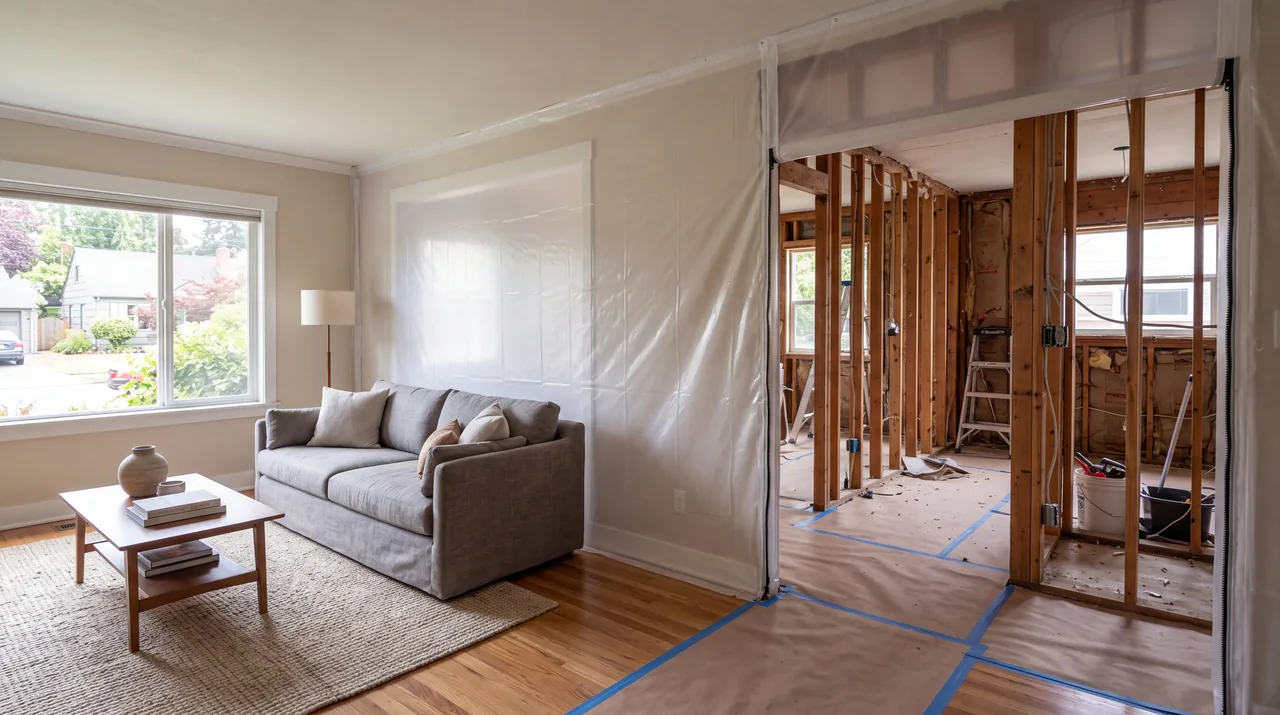
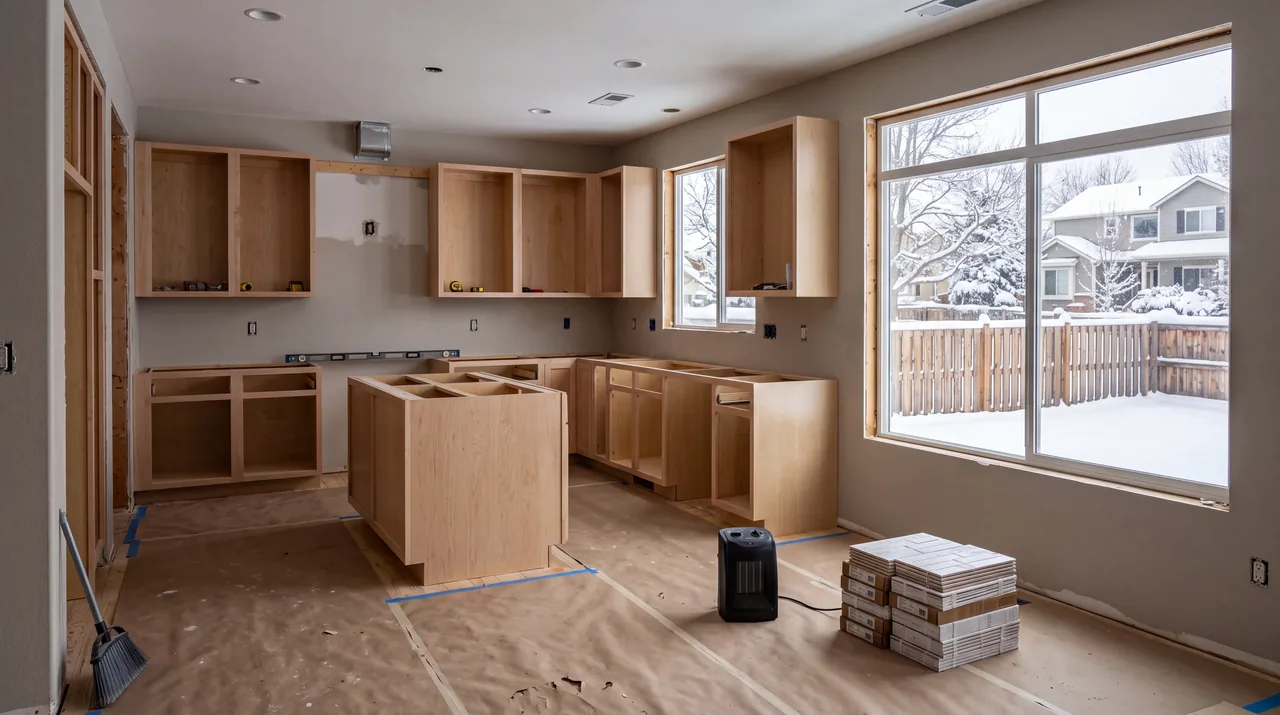
The lasting fix is to change what's around the pipe. Best is moving supply lines to an interior wall, which is straightforward during a kitchen remodel or a whole-home renovation when the walls are open anyway. If the pipe has to stay in the outside wall, it belongs on the warm side of the insulation: insulation between the pipe and the exterior sheathing, nothing between the pipe and the room. Then seal the penetrations where the lines enter the cavity and where the drain passes through the plate. For a single spot that freezes every winter, our repairs and renovations work covers opening the wall, correcting the layout and closing it back up properly.
Crawlspace pipes freezing
Crawlspace pipes freezing is usually an air problem. Many older crawlspaces have foundation vents built to stay open, and in January they pull in air at whatever temperature it is outside. Lines hung under the floor joists sit right in that draft.
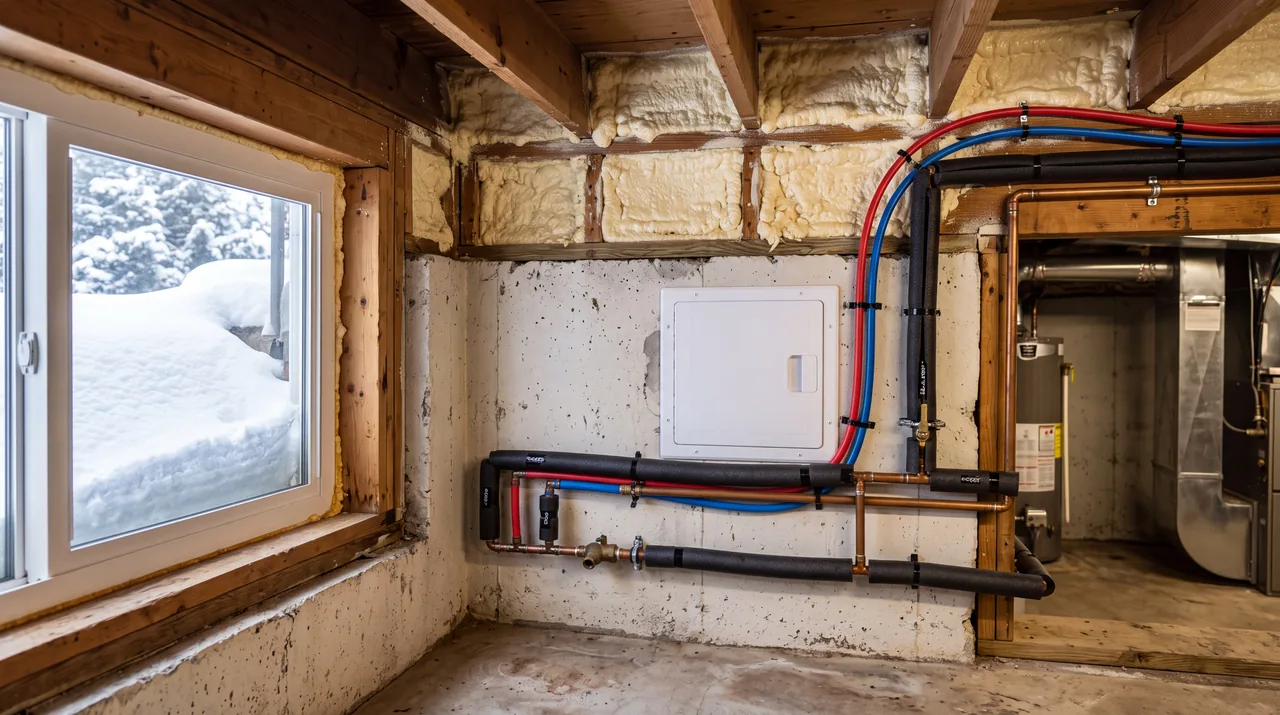
Short term, close or block the foundation vents for the cold snap, check that the access door shuts tight, and wrap exposed lines with foam pipe insulation sized to the pipe. Foam slows heat loss; it doesn't add heat, so an exposed run in a very cold space can still freeze if the water sits still long enough.
The permanent repair is to bring the crawlspace inside the building envelope. That usually means sealing the vents, insulating the foundation walls, and laying a sealed vapor retarder over the ground so the space stays close to the temperature of the house above it. The International Residential Code has specific provisions for unvented crawlspaces, including how they're conditioned or connected to the house's air; your local building department has the final word on what's required where you live.
The rim joist
The rim joist deserves its own attention. It's where the wood framing meets the concrete foundation, and it's often the leakiest spot in a basement or crawlspace. Rigid foam cut to fit each bay and sealed at the edges, or spray foam applied to the right thickness, stops the cold air that freezes lines running along the top of the foundation wall. This is the kind of joint we care about most: nobody sees it once the ceiling is finished, and it decides whether the pipes below it make it through February.
Garages
Attached garages along the Front Range often hold a water heater, a laundry hookup, a utility sink, or the supply line to a bathroom over the garage. Garages aren't heated, and the big door leaks.
For tonight, keep the overhead door closed and make sure its bottom seal touches the floor along its full width. Drip any faucet fed by a line that runs through the garage. Self-regulating heat cable listed by a recognized testing lab can protect a short exposed run; install it exactly as the manufacturer's instructions say.
Long term, reroute lines out of garage walls and ceilings where you can. Where you can't, as with a bathroom above, the pipes should sit tight to the heated floor above with the full depth of insulation below them, and the joist bays at the garage-to-house wall need to be air sealed. Insulating the overhead door and replacing worn seals helps everything in the space.
Hose bibs
Outdoor faucets freeze because water sits in the short section between the valve and the outside wall. A standard hose bib with its valve outdoors will split the pipe behind it if it isn't shut off and drained.
Do this now: disconnect every garden hose. A hose left attached traps water in the faucet and defeats even a frost-free design. If the outside faucet has an interior shutoff, close it, open the outside tap to drain the line, and leave it open for the winter.
The permanent repair is a frost-free sillcock, a long-stem faucet with its valve seat inside the heated part of the house. It has to be installed with a slight downward pitch toward the outside so it drains each time it's shut off. A frost-free faucet that splits was often installed level or tipped back toward the house, or had a hose left on. Replacing one while the rim joist around it is being sealed makes sense.
Additions and bump-outs
Additions create new cold edges: a bathroom over a cantilevered floor, a kitchen bump-out on piers, a laundry room built over an old patio slab, supply lines run through an unheated attic to reach a new space. Each one puts water lines next to framing with outside air on more sides than the original house.
Short term, the same steps apply. Open cabinet doors, drip the fixtures and keep the heat steady. If the addition is on its own zone, don't let it run colder than the rest of the house.
The lasting fix depends on how the addition was built. Cantilevered floors need the underside insulated and sealed with the pipes on the warm side, and attic plumbing should be rerouted into conditioned space. If you're planning a home addition, ask early where the water lines will run and how the floor and walls around them will be insulated and sealed. That decision is easy on paper and hard to change after drywall.
If one of these spots freezes in your house every winter, get in touch about fixing it for good.